Banking for gamers, and an honest ending
Mana was a debit card and banking app built for gamers: points on daily spending, gaming perks, quests, and the boring banking parts done properly underneath. I led the design end to end. It shipped, people loved it, and it wound down when the cost of replacing its banking partner became more than the product could carry.
 Joe ZhouCEO and founder, FirstBlood and Mana · on LinkedIn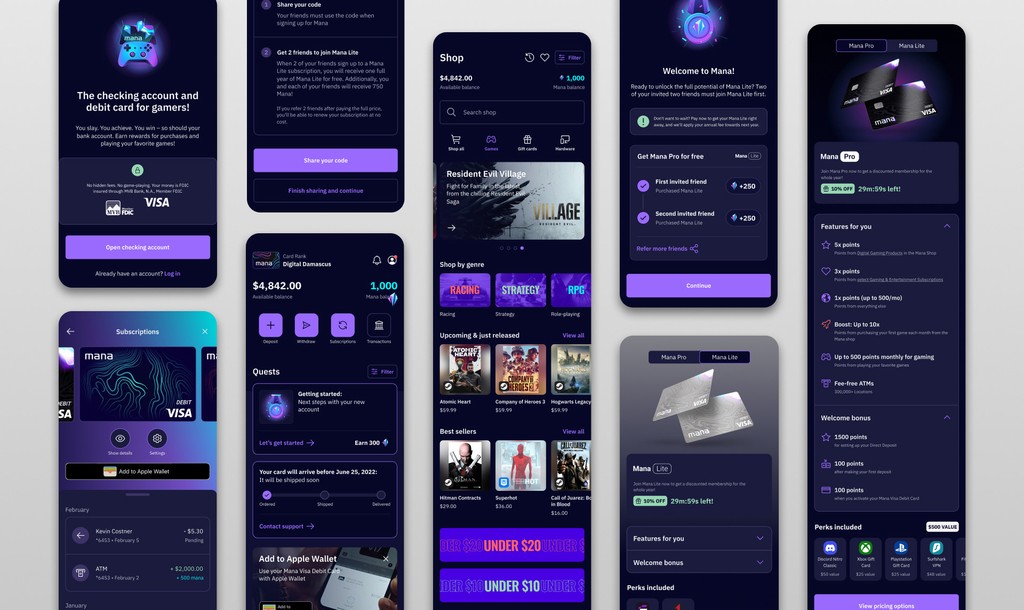
Banking apps treat a $9.99 game subscription and a $2,000 rent payment the same way: a line in a list. For people whose income comes from streaming and prize pools and whose spending is dozens of micro-transactions, that surfaces nothing useful. Mana was founded to be the first financial product that understood that world.
It had to feel natural to a nineteen-year-old gamer and still handle the full weight of a real checking account: transfers, card management, subscriptions, address verification, external bank linking. Playful without being cheap, serious without being sterile. My instinct about where that line sits was not always right, which is why every screen went through testing with real users.
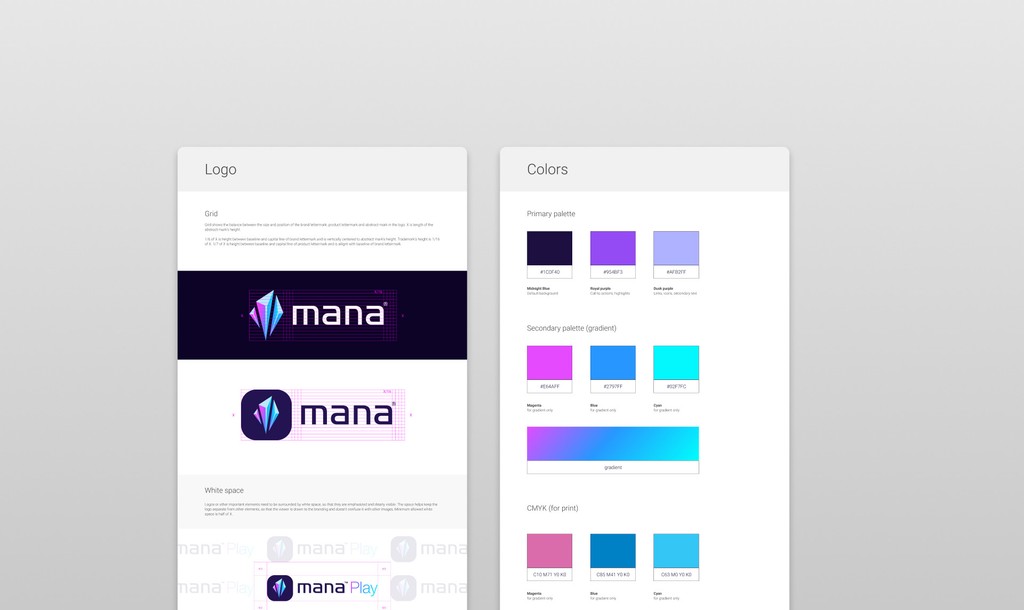
Designed the product from the first week on a design system, tested every flow with two audiences (first-time gamers and beta users), treated the compliance screens as design work rather than a necessary evil, and built a brand that worked from the card to the marketing site.
Mana shipped to a beta community that treated new releases like product drops, and raised a $7M seed in December 2021. The quest system moved completion on the financial actions banks struggle with: identity verification, savings goals, linking an external account. Then the banking-partner economics failed and the product was wound down.
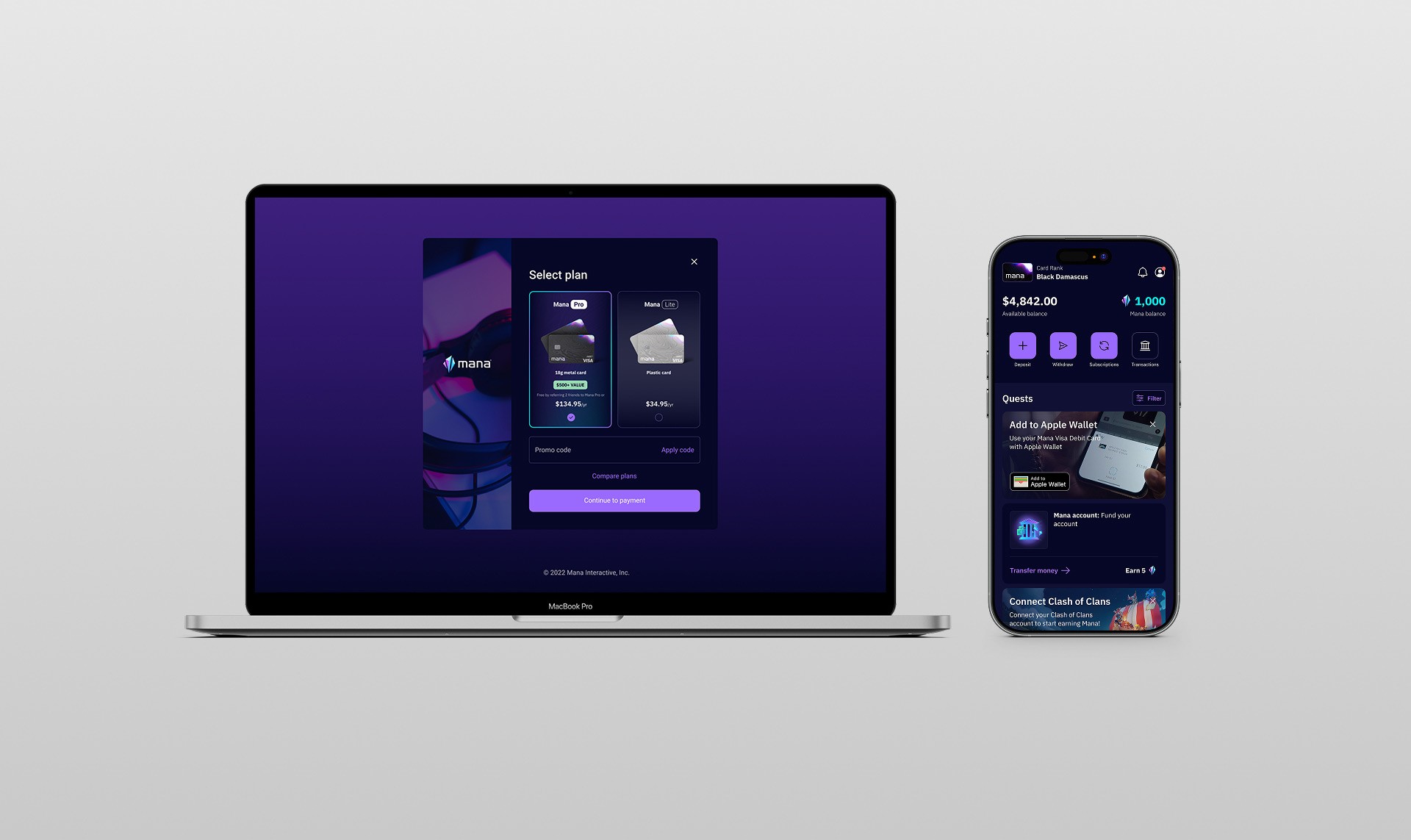
A home screen that works like a game lobby, not a statement
Earning is a verb in Mana, not a banner. Daily-spending points, connected-account rewards, referral quests and limited-time perks all live on the home surface, because that is where a gamer expects progression to live. The obvious alternative, a transaction list with a rewards tab, is what every other neobank does, and it would have made Mana one more of them.
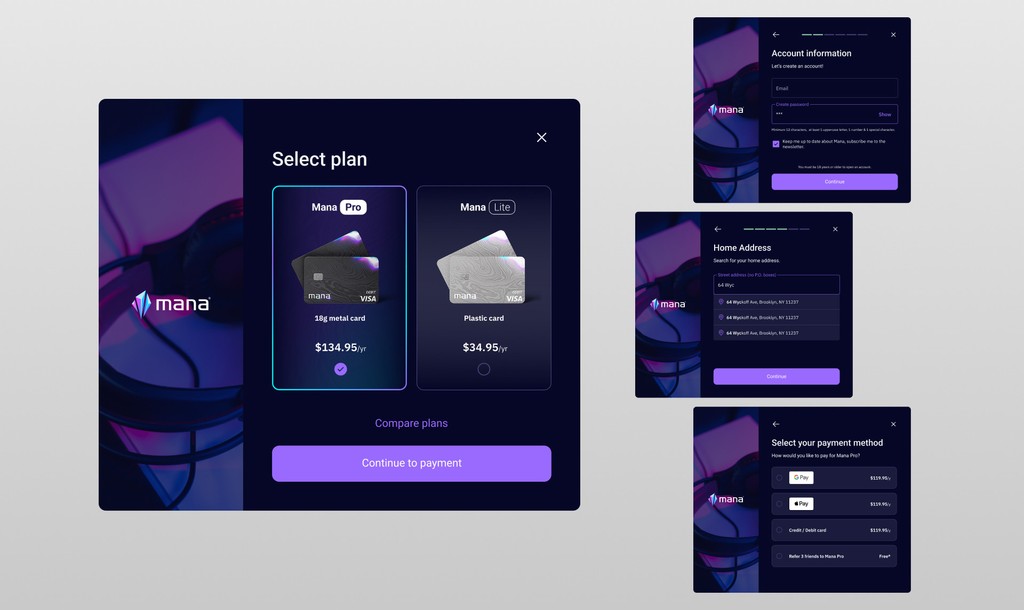
Plan selection got the same treatment: choosing Pro or Lite feels like choosing a character class rather than a pricing tier. In testing, that screen was the moment people said they realised this was not another banking app with a new coat of paint.
Compliance flows designed, not tolerated
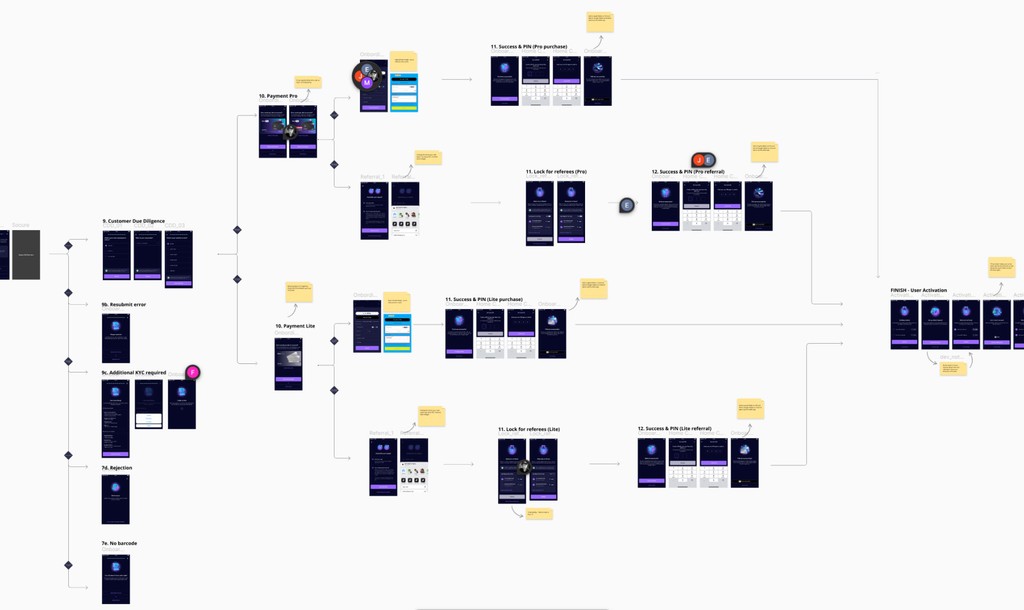
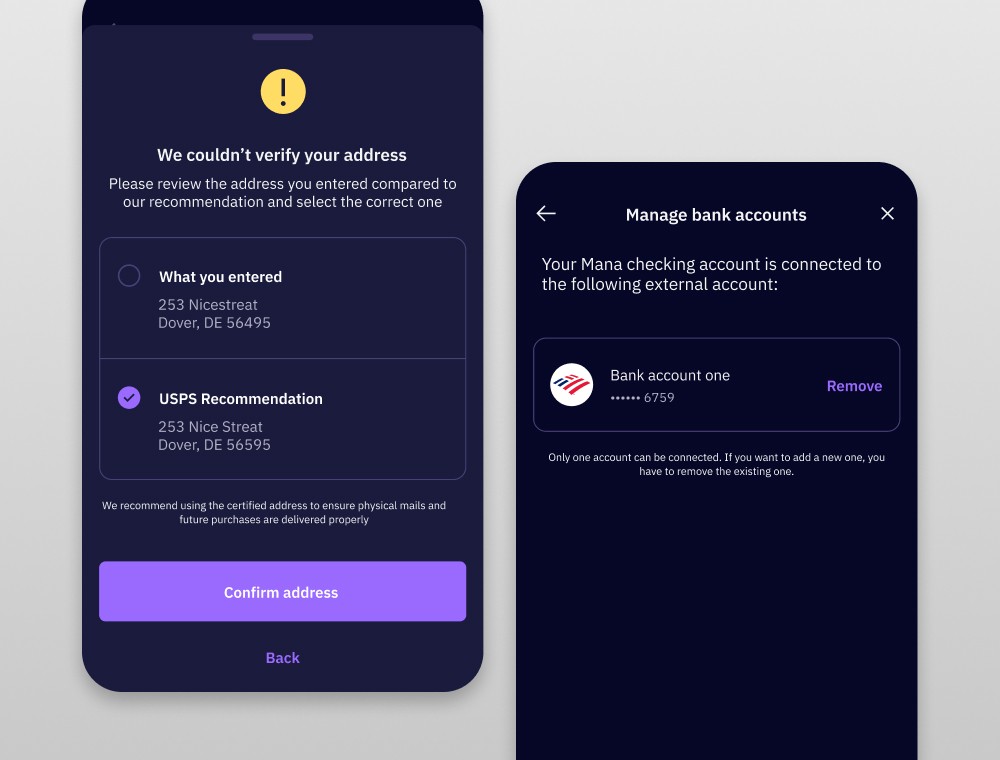
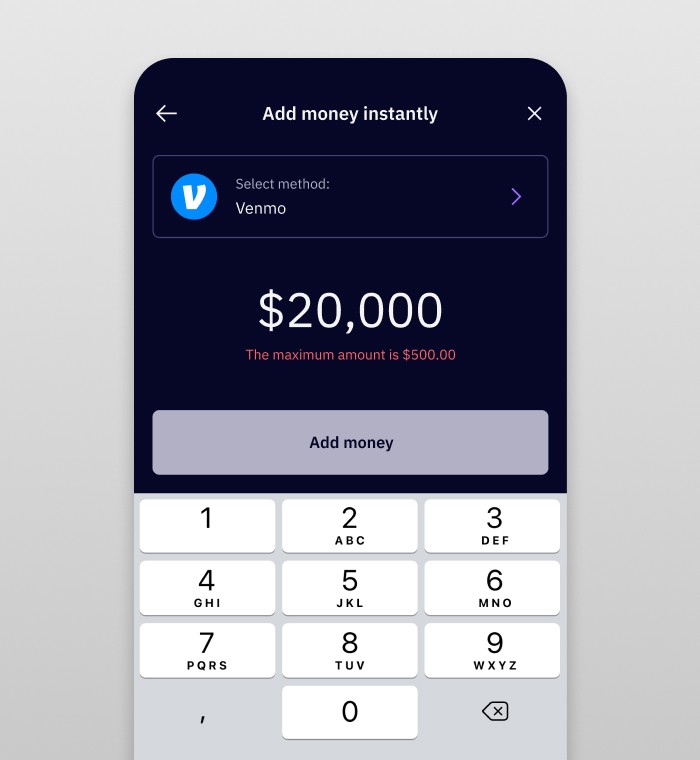
Address verification, external bank linking, transfer limits, identity checks. All of it has to exist because regulators require it, and all of it has to feel native to a product for gamers. I designed those screens to stay dark, clean and low-stress, so that a nineteen-year-old verifying their ID does not feel teleported into a 1990s bank branch.
The pay-off was concrete: when you respect those screens enough to design them, people finish them instead of dropping out halfway.
A design system from week one
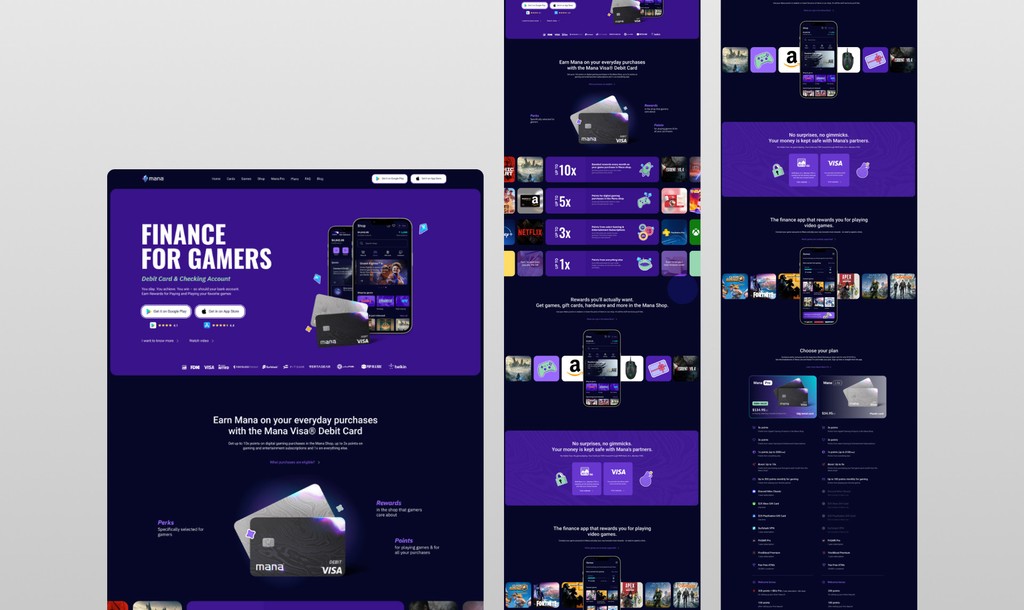
I built the Figma system in the first week, so cards, quest layouts, perk cards and banking primitives shared one language from the start. That early investment paid back fast: the junior designer I onboarded could ship confidently from day one, and the marketing designer I mentored produced material that looked like it came straight out of the app.
I ran one-on-one tests on clickable prototypes with two audiences, gamers opening their first checking account and active beta users. Their feedback directly simplified how spending tracking worked and where rewards showed up. The screens here are the result of several tight loops, not first drafts.
Two experiments that stretched the system
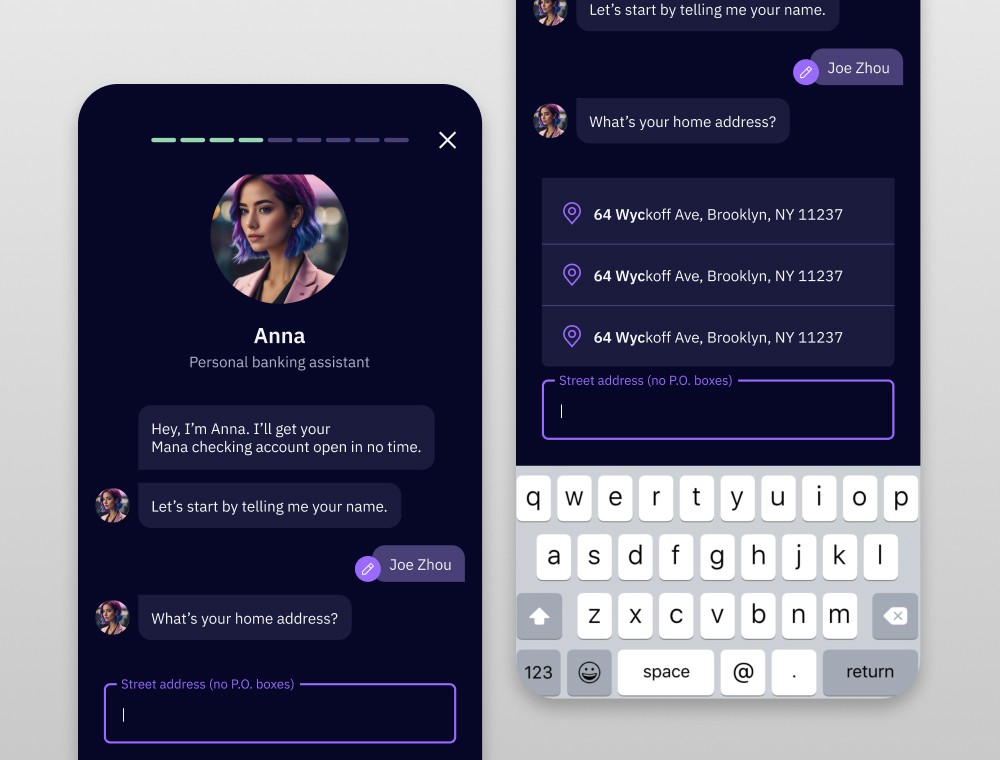
I prototyped a VR app for Meta Quest that reached development, a shared, game-like space for the Mana community tied to the brand. Separately, I started designing an AI-powered onboarding assistant, Anna, to replace the stack of legal forms with a conversation in plain language. Neither shipped to a wide audience. Both proved the design system and the brand could stretch into new formats without breaking.
Shipped, loved, and honest about the ending
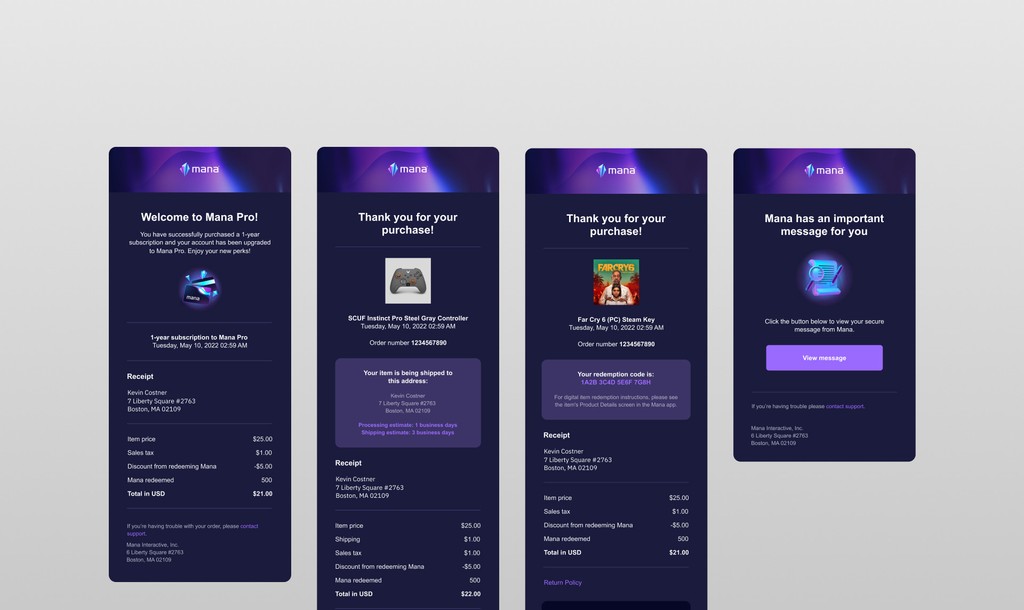
Mana shipped to an engaged beta community, raised a $7M seed in December 2021, and its quest system drove real completion on the financial actions banking apps usually struggle with. Then the product wound down: replacing its banking partner would have cost more than the app could sustain. That is a real fintech outcome and I would rather say it plainly than pretend every project ends in a hockey stick.
Mana also had a precursor I designed: Mana Play, a gaming-rewards app that served as the test bed for the ideas that became Mana. After Mana, the company relaunched it as Potion with a new visual skin by another team, on the UX I had designed. That version passed 100,000 installs on Google Play.
What stayed with me: how to make gamified finance feel genuine instead of gimmicky, how to test with the actual audience instead of guessing, and how to build a design system for a growing team rather than for the person who made it. All three show up in everything I have designed since.
- Mine
- End-to-end product design, the design system, brand, user testing, the marketing site, mentoring two designers
- Mana Interactive
- Product strategy, banking partnership, engineering and delivery