A dog-care app I designed and built, now in public beta
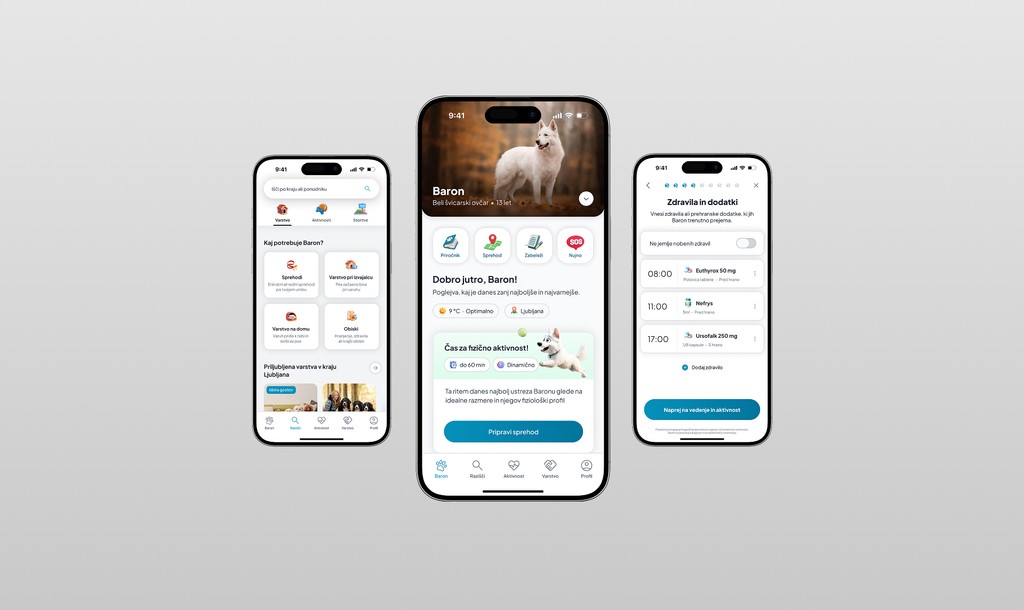
Baron helps dog owners judge what suits their dog today, then keeps walks, water, meals, medication and mood in one place. I founded it, designed it and built it, with Claude Code writing most of the code. It is in a free public beta on iPhone, so this page is about the decisions that got it there, not about results.
Every dog is different and so is every day. A 15-year-old chihuahua and a young husky should not get the same walk at 19°C and high humidity, yet owners decide that from habit and a weather app. What happens across the day, water, meals, medication, mood, lives in their head or in scattered notes until the vet asks.
The product has to hold a surprising amount of medical and behavioural data and still feel like a place an owner wants to open every day. Closer to a wellness app than a veterinary portal, but credible enough that a vet reading over an owner’s shoulder would trust it.
Made the dog’s profile the spine of the product, designed Baron Shield as a rules engine rather than AI, cut the pitched marketplace down to the owner’s half for the first version, and built the app, its API and an admin tool myself.
A free public beta on iPhone through TestFlight since September 2026; the Android version is in Google Play review. It is early and it has no usage numbers worth quoting yet, so this page quotes none.
Ship the owner’s half first; the marketplace waits
I pitched Baron as a pet-care marketplace: vetted sitters, a shield on every booking, a live journal of the walk. The first version has none of that. It is the owner’s app: the dog’s profile, the daily recommendation, the journal, reminders and emergency help.
The alternative was to launch the marketplace as pitched. A marketplace gives an owner nothing until there are sitters nearby, and it needs payments, verification and support before the first booking. Solo, that is months of work before anyone gets value. The owner’s half is useful to one person with one dog on day one, and it builds the profile the marketplace will need later. I wrote the cut down as a scope document that marks every module live, stubbed or refused, so booking, payments and sitter listings exist as data shapes only and the second version is additive rather than a rebuild. The cost: no revenue in the beta, and what testers get is not what investors saw.
Baron Shield is rules, not AI
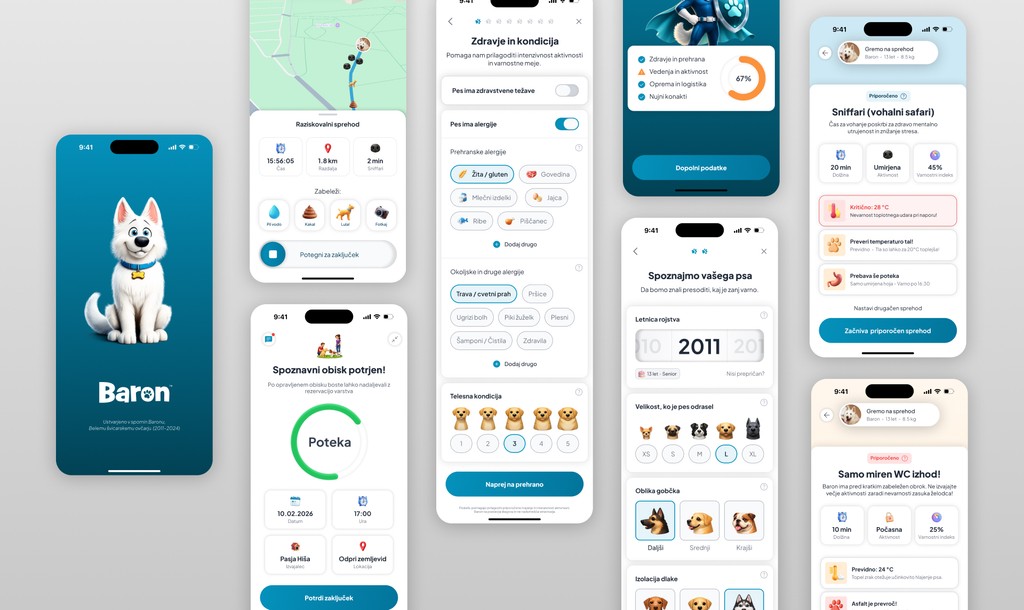
Baron Shield combines the dog’s profile with the current conditions and recommends an activity for today: for that chihuahua, a calm walk of up to 25 minutes, slowly, with a note that heat stress risk is raised and older dogs manage exertion less easily. It follows rules written with a vet, a canine nutritionist and a licensed dog mediator. The same inputs always give the same result, and when data is missing it becomes more cautious, never less.
The alternative was a model that learns recommendations. It would demo better and it would be impossible to review: a vet cannot sign off on a threshold that moves, and an owner cannot be told why the answer changed. The cost of rules is that every case has to be written down by hand, and the app says “I don’t know enough, go gently” more often than a clever model would.
The dog’s profile is the product’s spine
Every dog on Baron gets a structured profile: vaccinations, medications, allergies, temperament, daily routine. That data is not filler for a settings page. It drives the Shield’s recommendation, the reminders and the emergency details, all reading from the same source, so the product gets more useful the more an owner fills in. Filling in a health history is the kind of task most apps bury in a long form, so I designed it as short steps with clear progress and a profile that visibly grows as you answer. Several dogs each get their own profile and journal.
Rewards that never reward overdoing it
The journal is built for small, quick entries: six activity types outdoors and at home, and one-tap logs for water, meals, mood, weight, medication and vaccines during or after them. To keep owners coming back there are twenty badges. The obvious version counts streaks and kilometres, which pushes an owner to walk an old dog further on a hot day. Activity badges in Baron only count on days you followed the Shield’s recommendation, so the game and the safety advice point the same way.
One person, three codebases, rules the AI could not break
Baron is a React Native app, a NestJS API and an admin tool, around 1,500 commits between April and September 2026. Claude Code wrote most of that code. What made it possible for one person was writing the architecture down first and turning its principles into tests: the server computes every risk, the app only renders it; nothing personal reaches logs or analytics; missing data raises caution. A change that breaks one of them fails the build, whoever wrote it.
The product and its scope, every screen and the design system, the architecture and the rules the code is tested against, the Shield content with the experts, the brand, the website and every release to TestFlight.
Wrote most of the app, API and admin code within those rules, the tests alongside it, and the repetitive work of states, translations and migrations, which I reviewed before anything shipped.
Two objects for the moment you hand over the leash
The marketplace is designed, and it is the second version. The Baron Shield on every booking confirms that health protocols, sitter verification and care standards are in place, at the exact moment an owner is about to walk away from their dog. Once the walk starts, the Live Journal takes over: GPS, activity, photos and health markers as it happens, so the owner watches the day instead of getting a summary after it.
- Mine
- Product, design, brand, the data model and the architecture, the app, API and admin (with Claude Code), the website, pitch and investor material
- Experts
- A vet, a canine nutritionist and a licensed dog mediator, on the Shield rules and the care content
- Status
- Founded and run solo; public beta on iPhone, Android in Google Play review